
Closing the loop: Circular Fencing for Nature
-
Across the Karamū catchment, thousands of orchard and vineyard posts eventually reach the end of their productive life. While they are no longer suitable for horticultural use, many still have decades of structural life remaining. Instead of becoming waste, these materials are an untapped resource that could help solve one of the biggest challenges facing ecological restoration: cost.
As restoration efforts expand across productive landscapes, the cost of protecting biodiversity continues to rise. Deer exclusion fencing is one of the most effective ways to protect native vegetation from browsing ungulates, but the infrastructure required can place restoration out of reach for many landowners and community groups.
This project asks what if yesterday's orchard posts could become tomorrow's conservation infrastructure?
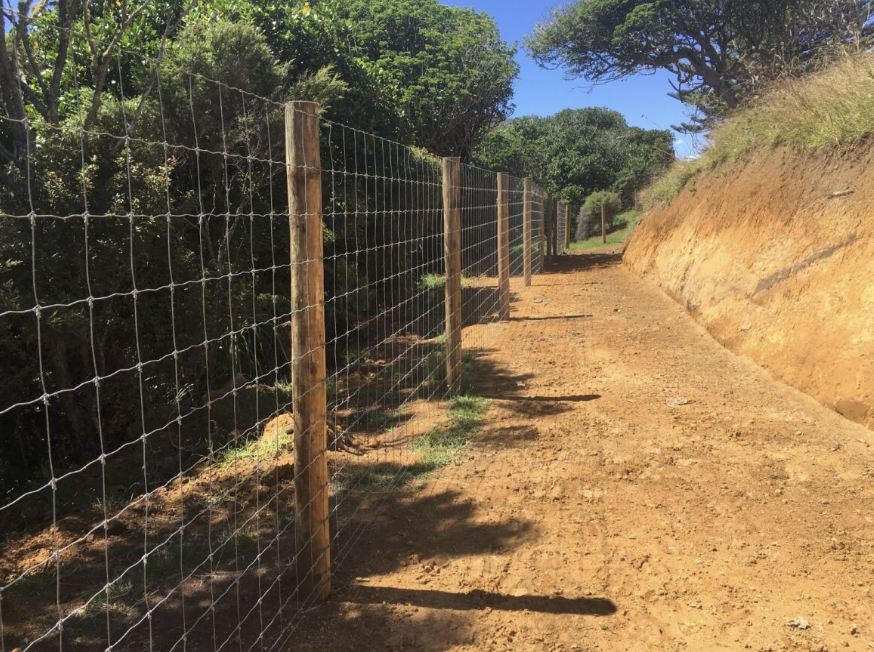
By repurposing retired orchard and vineyard posts into affordable deer exclusion fencing, we're testing a practical circular economy solution that keeps valuable materials in use while reducing the cost of restoration. If successful, this approach could make biodiversity protection more affordable, scalable and accessible for everyone.
It's an opportunity to turn a local waste stream into a local conservation solution reducing environmental impact, lowering costs, and helping more restoration projects happen where they are needed most.
-
One of the biggest barriers to restoring biodiversity is not a lack of willingness, it's the cost.
Protecting native ecosystems often requires deer exclusion fencing before restoration can even begin. For many landowners, the cost of materials and installation can make projects financially out of reach, particularly as traditional funding sources become increasingly constrained. With funding from organisations such as Hawke's Bay Regional Council and the QEII National Trust under growing pressure, there is a need to find new, more affordable ways to deliver restoration at scale.
There is also a practical reality: every restoration project has a finite budget. If a large proportion of that budget is spent on fencing, there is less available for weed control, native planting, and ongoing maintenance. Reducing infrastructure costs allows more investment to be directed into more plants in the ground.
At the same time, the Karamū catchment is facing another challenge. As orchards and vineyards are redeveloped, thousands of timber posts are being retired from productive use each year. While no longer suitable for horticultural production, many remain structurally sound and have decades of useful life remaining.
These two challenges present one opportunity: can we transform a growing waste stream into a practical conservation solution?
-
This project is about proving that innovation and collaboration can make ecological restoration more accessible, more affordable, and ultimately more achievable.
If we can reduce the cost of protecting restoration sites without compromising ecological outcomes, the benefits extend far beyond a single property. Every dollar saved on infrastructure is a dollar that can be reinvested into native planting, weed control, predator management, and the long-term stewardship that healthy ecosystems require.
It also demonstrates how productive landscapes and environmental restoration can work hand in hand. By giving retired orchard and vineyard posts a second life, we're embracing a circular economy keeping valuable resources in use, reducing waste, and creating solutions that benefit both the environment and the local economy.
Most importantly, this project has the potential to become a model for others. If successful, the approach could be adopted by landowners, catchment groups, councils, and restoration organisations across New Zealand, helping stretch limited conservation funding further while accelerating biodiversity restoration where it is needed most.
Sometimes the biggest environmental gains don't come from spending more, they come from thinking differently.
-
This project aims to better understand whether reused orchard posts can provide an affordable and scalable alternative to conventional deer exclusion fencing for biodiversity protection. Expected learnings will include:
Whether recycled materials can achieve comparable biodiversity protection outcomes to conventional QEII-standard fencing systems
The extent to which this model is financially viable and replicable for other landowners, catchment groups, councils, and biodiversity restoration projects
Genuine insights into installation methods, labour costs, construction challenges, durability, and ongoing maintenance needs
How material reuse can contribute to reducing waste and supporting lower-carbon restoration approaches within rural landscapes
The project will assess whether the fencing system can deliver the same level of protection as conventional deer fencing while reducing material costs and environmental footprint. Alongside this, we'll evaluate its practicality and long-term viability on farm.
Ultimately, we are building a system. One that shows how collaboration, innovation, and smarter use of local resources can help restore more wetlands, protect more native biodiversity, and put more plants in the ground for the same investment.
The project will monitor and quantify a range of practical, environmental, and economic outcomes to evaluate the effectiveness of this fencing approach. Measurable outcomes include:
Comparative fencing cost per square metre between conventional QEII fencing and reused-post fencing systems
Total project cost savings achieved through material reuse
Installation labour requirements, including total labour hours and construction practicality
Assessment of anticipated fence lifespan and structural durability
Maintenance requirements and estimated ongoing operational costs over time
Quantification of reused materials, including the number of orchard posts repurposed
Estimated reduction in waste to landfill and associated carbon footprint from material reuse
Deer exclusion effectiveness, measured through pellet counts and browse pressure monitoring inside and outside fenced areas.
-
Success at Hautapu Wetland looks like a living, resilient ecosystem that is actively recovering and able to sustain itself over time.
It begins with the 12-hectare QEII covenant fully protected from browsing pressure, allowing native vegetation to establish, regenerate, and mature without continual loss to deer. Over time, this protection enables a visible shift in the wetland structure from vulnerable and fragmented vegetation to a stable, self-reinforcing indigenous system.
It also looks like strong, healthy plant communities expanding across the site, supporting improved habitat for native birds, invertebrates, and freshwater species, and restoring the ecological function of the wetland.
A key aspiration is the return of high-value wetland specialists, including Australasian bittern (matuku), establishing Hautapu as a safe breeding and feeding ground within the Karamū catchment. There is also the opportunity for rare and sensitive wetland flora such as swamp nettle, alongside other nationally significant wetland species, to re-establish and thrive as conditions improve.
Alongside ecological restoration, success is also deeply social. It is about creating pathways for people to engage meaningfully with the taiao, including partnerships with organisations such as Project Patu that support people to build skills, confidence, and wellbeing through environmental work. It is also about strengthening the role of mana whenua in restoration, ensuring meaningful involvement in decision-making, delivery, and connection to place through active participation in the taiao.
Beyond this, success is landowners, leaseholders, mana whenua, and partners feeling proud of what has been achieved on the whenua, with a shared sense of stewardship and collective ownership of the restoration journey.
Financially and operationally, success includes a restoration model that is sustainable over time supported by a mix of funding pathways, including potential ETS revenue, grant funding, and ongoing partnerships that reduce the burden on any single party.
Ultimately, success is Hautapu Wetland functioning again as a healthy, connected part of the Karamū catchment—supporting biodiversity, strengthening community wellbeing, improving water resilience, and standing as a long-term example of what coordinated restoration can achieve.
-
This project is funded by the Karamū River Catchment Collective with support from the Ministry for Primary Industries (MPI) enabling delivery, testing, and evaluation of this innovative restoration approach.