
Growing a Legacy: Local Kids and Landowners Protect a Special Wetland
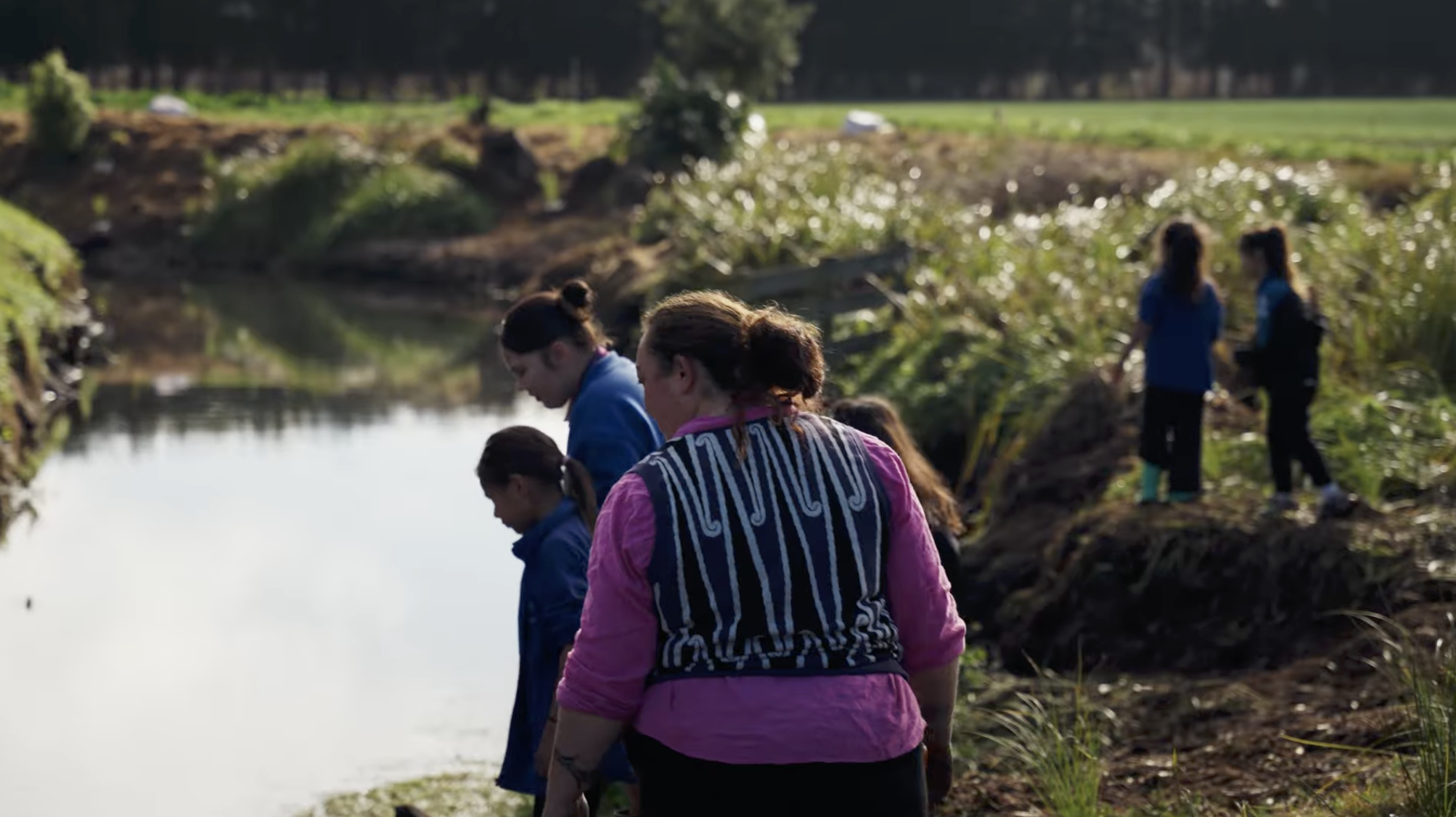
Photo credit Michael Farr
Mangateretere Primary School has stepped out of the classroom and into the landscape that surrounds it.
As part of the Karamū River Catchment Collective, the school has been involved in restoring a treasured wetland at the headwaters of the Mangateretere Stream. The planting phase has now been completed, with 1,600 native species planted across two land titles. Mr Apple orchard teams and RSE workers supported the planting day alongside the school and wider community, helping to get plants into the ground and contributing to the delivery of the project on the day. Their involvement allowed students to observe the planting process in practice. Mr Apple also provided a BBQ for those involved, marking the end of the day.
This wetland restoration creates space for students to understand how land, water, history, and community are woven together in this place. Long before orchards, cropping, and urban development shaped this part of Heretaunga, this landscape formed part of the extensive Waipuna wetland system. Pre-1938 soil mapping shows a network of around 57 freshwater springs flowing through what was once a connected hydrological landscape within the wider Karamū catchment.
Charles Ropitini, Cultural Engineer at Hastings District Council, notes that Waipuna means “spring waters” or “spring fields”, reflecting the spring-fed nature of the landscape. He also describes the taniwha Wahaparata as the “breathing” between the freshwater springs of Waipuna and the saltwater influence of the Karamū as it flows through the Mangateretere Stream.
Today, the surrounding land supports highly productive horticulture, including onions, apples, and squash that contribute to the local economy. Within this working landscape, neighbouring landowners Mike Lawson and Mike Watson continue to protect natural spring systems on their properties, playing an important role in maintaining ecological continuity across the area.
The next phase of the project, supported by Biodiversity Hawke’s Bay, will focus on predator control, including a new trapline connecting the restored wetlands. This will extend habitat protection and help protect native birds moving throughout the catchment.
The Hawke’s Bay Regional Council Biodiversity team, led by Annabel Beattie, co-funded and developed the planting plan alongside landowners, while the Open Spaces team, led by Rod Dixon, identified the wetland opportunity.
For Mangateretere Primary students, the project is now about observing what has been planted, learning how the system establishes, and understanding how restoration links directly to the health of their wider community and environment.
In many ways, this work is about a living landscape. One where people, water, and land continue to shape each other, and where the next generation is part of that ongoing story.
