
Possum Control
About Possums
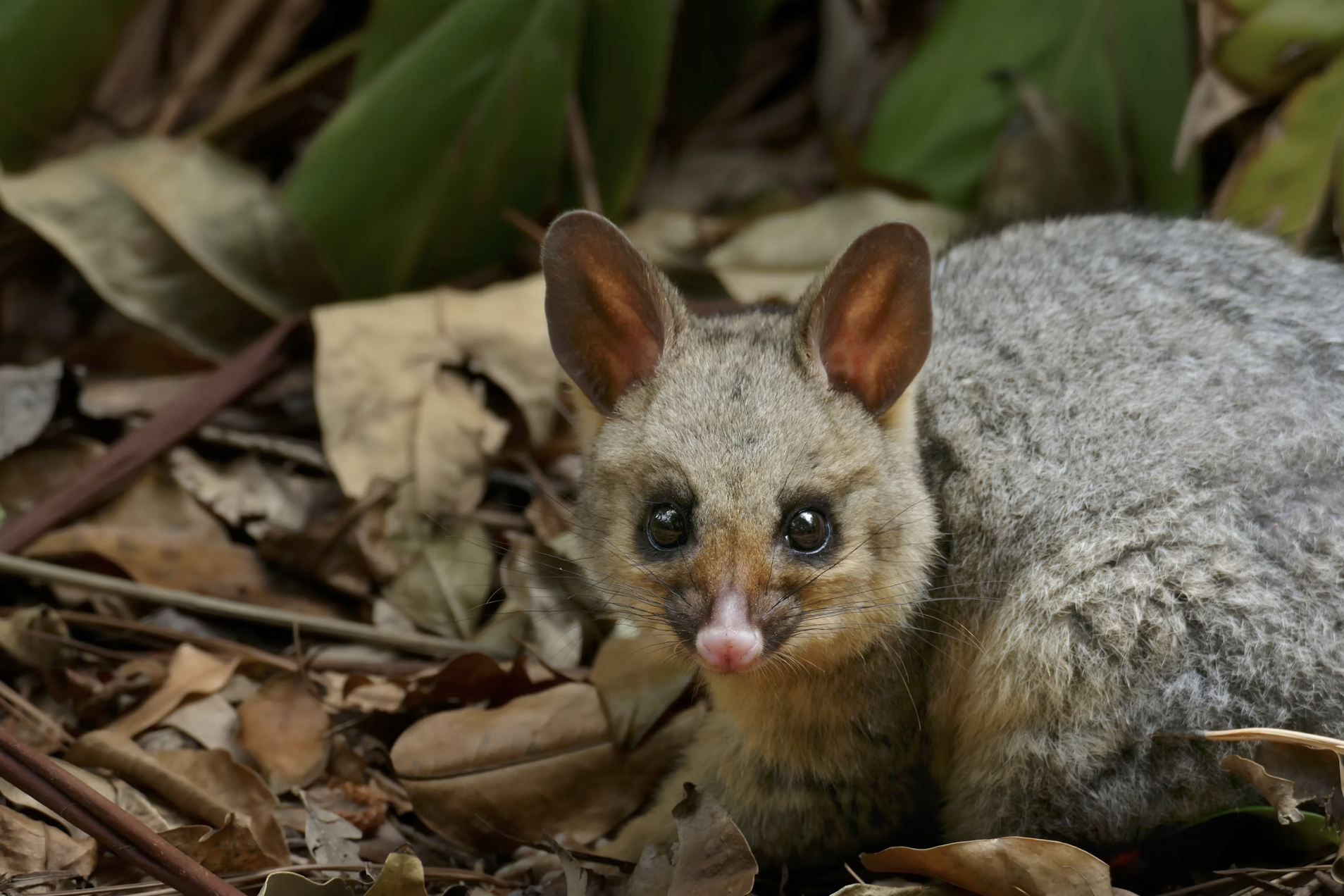
The brushtail possum (Trichosurus vulpecula) was introduced to Aotearoa from Australia in 1837 in an attempt to establish a fur trade. Today, possums are estimated to number around 70 million and are found across more than 90% of New Zealand’s mainland.
Possums are adaptable and can live in a wide range of habitats, although they are particularly successful in native forests and along forest margins. They are mostly solitary, with individuals occupying defined home ranges that can overlap with others. Young possums remain with their mothers for around five to eight months before becoming independent, and some can disperse up to 20 kilometres from where they were raised.
Their ability to survive on a remarkably varied diet is one of the reasons possums have become such a successful pest. They are omnivores, feeding on leaves, ferns, fruit, seeds, bark, flowers and buds, as well as invertebrates, bird eggs and chicks. This flexibility allows them to adapt when some food sources become scarce and to make use of different habitats throughout the year.
The average lifespan of a possum is 7-10 years and females can begin breeding from around one year of age. They generally produce one young each year, usually in autumn, but when food is abundant they may breed again in spring. With their ability to move into new areas, possum populations can recover and spread following control if management is not maintained.
Why are possums such a problem?
Bovine tuberculosis (Tb)
Bovine tuberculosis (Tb) is caused by the bacterium Mycobacterium bovis. It is a serious animal health issue and has implications for New Zealand’s primary industries and international reputation as an exporter of agricultural products. Tb can infect a range of mammals, including farmed cattle and deer and wildlife such as wild pigs. Tb is a serious and often fatal disease for possums. In cattle and deer, infection can compromise the immune system and lead to clinical disease, with the potential to spread through a herd if it is not detected and managed. Tb is a chronic disease and infected animals may carry and spread the bacterium over time. Reducing possum populations to sufficiently low levels can help reduce the risk of Tb transmission.
Useful resources
Other damage
Possums are opportunistic feeders and will make use of both native and introduced vegetation. They can feed on pasture plants such as clover and herbs, as well as crops, garden plants, shelterbelts and trees. Their impacts can be noticeable around forest margins, where possums can travel up to 1.5 km each night between forest and pasture to access different food sources. They may browse young shoots, strip bark and damage trees in forestry, shelterbelts and erosion control plantings. On farms and lifestyle properties, possums can also damage fruit trees, vegetables, ornamental plants and other crops. While the impact may vary between properties, persistent browsing can reduce plant health and productivity.
Damage to natural ecosystems
The greatest ecological concern is the pressure possums place on our native forests and wildlife. Possums feast on a range of native plants and can selectively target species such as rātā, kāmahi, kōwhai, fuchsia and fivefinger. Repeated browsing can reduce flowering and fruiting, weaken individual trees and prevent some plants from regenerating. Over time, this selective feeding can change the composition and structure of native forests.
Possums also compete with native birds and other wildlife for nectar, fruit and flowers. They can prey on eggs and chicks and compete with native species for tree cavities and other shelter.
When possums reduce the abundance of particular plants, they also reduce the food and habitat available to the insects, birds and other species that depend on them. Maintaining healthy possum numbers is therefore an important part of protecting native biodiversity and supporting the broader health of our catchments.
How do I know if I have possums?
Possums are nocturnal, so you are unlikely to see them during the day. Instead, look for the signs they leave behind. Knowing what to look for can help you identify possum activity before deciding whether control is needed.
Trails: Possums often use the same routes between shelter and food. Look for narrow, well worn tracks through grass, along fence lines, or through bush and forest. These regular pathways are sometimes called possum runs or pads.
Trees: Look for areas where bark has been rubbed smooth or where there are visible claw marks, particularly around the trunks and bases of trees that possums favour. You may also notice distinctive bite marks where possums have marked their territory.
Droppings: Possum droppings are small, rounded pellets, roughly similar in size to jelly beans. Their colour can vary depending on what the possum has been eating, so droppings can sometimes provide clues about recent feeding activity.
Feeding damage: Possums often target fresh, nutritious growth. Look for missing buds, flowers and young shoots on fruit trees, roses and native plants. They may also chew the skin of citrus fruit or leave vegetables partially eaten. Browsed vegetation can have a distinctive ragged or uneven appearance.
Nocturnal activity: If you want to confirm whether possums are active, check likely feeding areas after dark. A torch can help identify animals moving through trees or feeding, although care should be taken not to disturb wildlife unnecessarily.
Looking for several signs together will give you a much clearer indication of whether possums are active on your property than relying on a single sign alone.
Possum Control
Controlling possum numbers is an important part of restoring balance to New Zealand’s ecosystems. Alongside predator control, restoration planting and habitat protection, possum management helps create the conditions needed for native forests and wildlife to recover.
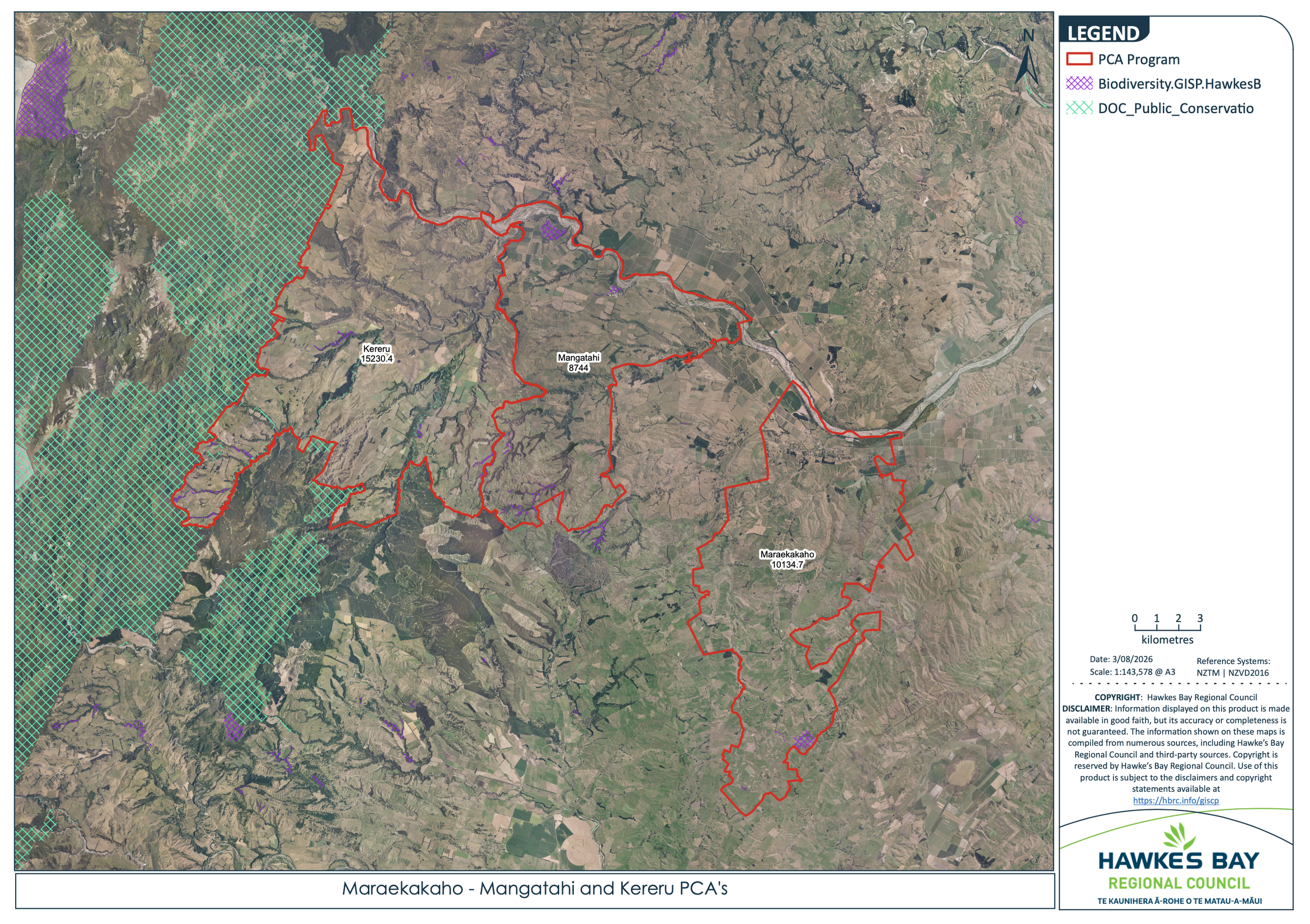
Hawke’s Bay Regional Pest Management Plan (RPMP) requires that any occupier within a PCA maintains possum densities on their land at or below 4% Residual Trap Catch Index (RTCI). This is to ensure that possum population levels remain below the level where economic and environmental values might be threatened.
Hawkes Bay Regional Council Possum Control Area (PCA) Programme
For avoidance of misunderstanding, this content has been retrieved directly from the Hawkes Bay Regional Council Regional Pest Management Plan 2018-2038. Hawkes Bay Regional Council have been managing a PCA programme since 2000 which spans over 700,000ha of our region. Under the Regional Pest Management Plan, Objective 11 (page 66) notes Over the duration of the Plan, sustainably control possums contained within Possum Control Areas to ensure population density on that land is at or below 4% residual trap catch with no more than three possums in a single monitoring line, to minimise adverse effects on environmental values and economic wellbeing within the Hawke’s Bay region.
Plan Rule 14
An occupier within a Possum Control Area (Figure 11 above) shall maintain possum densities on their land at or below 4% residual trap catch with no more than three possums in a single monitoring line, in accordance with the Hawke's Bay Regional Possum Control Technical Protocol (PN 4969). This rule does not apply if the property is under active possum management by the Hawke’s Bay Regional Council or OSPRI. A breach of this rule creates an offence under section 154N (19) of the Act. Reference page 66.
Explanation of rule
The reason for this rule is to protect past investment in possum control by ensuring possum population levels remain below the threshold at which economic well-being and environmental values are threatened. The Council believes that requiring no more than three possums per monitoring line is an effective way of measuring the effectiveness of possum control efforts. The Council is moving from an occupier responsibility model to council contractor delivery of possum control. This will take time to implement. Occupiers will continue to be responsible for possum control in the interim. However, once possums are being actively managed by the Hawke’s Bay Regional Council the rule will no longer apply to occupiers. Further, the rule will not apply to any occupier who remains within a TB Management Area where possums are being actively managed by OSPRI.
Exemptions to possum control may be sought under section 87 of the Biosecurity Act 1993. The subsidy schemes associated with the PCA programme will be phased out as large-scale contracting is implemented across PCAs.
Plan Rule 15: This is designated a Good Neighbour Rule
Except where an occupier of land has entered into a Written Management Agreement approved by Hawke’s Bay Regional Council, an occupier within, or adjacent to, a Possum Control Area, shall, on receipt of a written direction from an Authorised Person maintain possum densities on their land at or below 5% residual trap catch with no more than three possums in a single monitoring line in 500 metres of the adjoining property boundary where the occupier of the adjoining property is also maintaining possum densities on their land at or below 5% residual trap catch. This rule will not apply to any occupier where possums are being actively managed by HBRC or OSPRI at or below 4% residual trap catch. A breach of this rule creates an offence under section 154N (19) of the Act. Reference page 67.
Explanation of rule
The reason for this rule is to manage the spread of possums causing unreasonable costs to the adjacent occupier where active possum management is being undertaken by that occupier.
Advice note
Sections 52 and 53 of the Biosecurity Act 1993, which prevent the communication, release, spread, sale and propagation of pests, must be complied with. These sections should be referred to in full in the Biosecurity Act 1993. A breach of these rules creates an offence under section 154(O) of the Act.
Possum control and caution periods
The RRMP does not prescribe which chemical must be used for possum control. However, landowners should be aware that different possum control products have different caution periods, where land is used for hunting or where wild animals may enter the food chain. The caution period depends on the poison group; group 0 poisons have no caution period while poision group 4 has a 3 year caution period requiring a 5km bufferzone for pigs.
For example, Brodifacoum has a three year caution period, while pindone has a two month caution period. Other poisons, including cholecalciferol, hydrogen cyanide, phosphorus, potassium cyanide and sodium cyanide (poison group 0) are classified by MPI as having no caution period.
The choice of control method should therefore consider not only effectiveness and target pest control, but also the intended use of the land, livestock and hunting activities, potential access by non-target species, and the implications of the poison’s caution period.
MPI’s current guidance groups vertebrate toxic agents according to their caution periods, ranging from no caution period to three years. Landowners should check the current product label and MPI requirements before undertaking pest control, as requirements can vary between products and uses.
Useful resources: