
Waipuna Wetland Restoration
-
Wetlands are some of the most valuable ecosystems in our landscape, yet they are also expensive for private landowners to restore and maintain. Fencing, weed control, native planting, and ongoing maintenance require major time and financial investment, often placing restoration beyond the reach of individual landowners.
Yet the benefits extend far beyond a single property. Healthy wetlands improve water quality, reduce flood impacts, provide habitat for native species, and help protect drinking water supplies for entire communities.
The Waipuna wetland is a good example. Located upstream of Havelock North's drinking water supply, this small spring-fed wetland has the potential to naturally filter runoff before it reaches the aquifer. It also represents one of Hawke's Bay's rarest ecosystems, with only around 4% of the region's historic wetlands remaining.
Restoring places like this cannot rest with landowners alone. Protecting our water, biodiversity, and climate resilience requires collective action; bringing together communities, councils, funders, and landowners to invest in nature-based solutions that deliver benefits well beyond the farm gate.
Historically, this type of wetland was far more extensive across Hawke’s Bay, but only around 4% of its original extent remains, making it an acutely threatened ecosystem type.
Parts of the site still retain strong indigenous character, including stands of rautahi (Carex geminata) and umbrella sedge (Cyperus ustulatus), supported by consistent spring flows. Previous willow removal by council has already shifted the site away from a degraded willow-dominated system toward a recovering wetland environment.
-
This wetland is part of the natural infrastructure to help protect Havelock North's drinking water.
The 2016 campylobacter outbreak, which claimed four lives and affected thousands of people, evidenced how vulnerable groundwater can be when contaminants move through the landscape and reach the aquifer. It made us thiking about protecting water at its source, not just treating it once it reaches the tap.
As urban pressures grow and freshwater becomes an increasingly valuable resource, restoring wetlands is one of the most effective nature-based solutions available. Healthy wetlands naturally filter sediment, nutrients, and microbes before they enter groundwater, while also providing habitat for native wildlife. Although the nearby bore is no longer in use, protecting this recharge area today helps safeguard an important water resource that future generations may once again depend on.
-
Restoring wetlands requires funding, strong partnerships, and people willing to actively take part.
At the Karamū River Catchment Collective, we support landowners to turn restoration aspirations into action by helping secure funding that reduces the financial barriers of ecological restoration. We also work alongside council ecologists to ensure projects are guided by best practice and deliver meaningful outcomes for biodiversity and water quality.
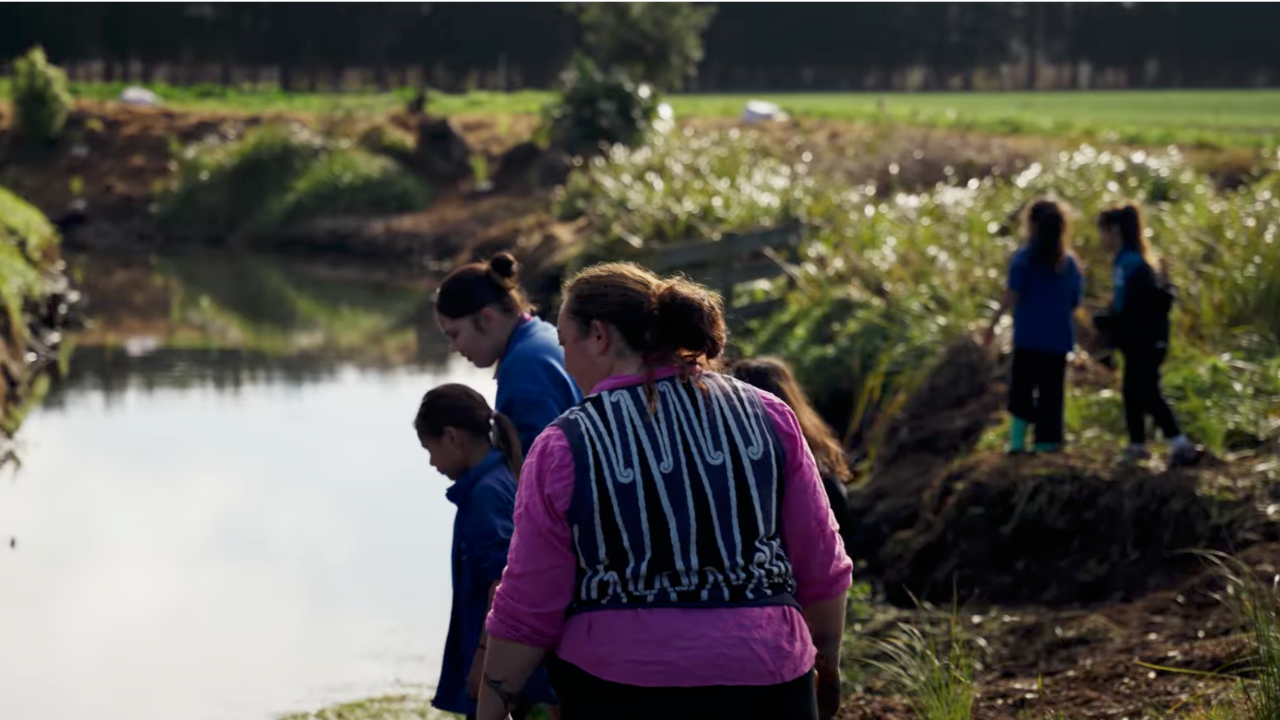
From there, we bring the wider community into the work, creating opportunities for local schools to participate in a planting day that connect students directly with the restoration of their local environment.
-
This project was delivered through a collaborative approach that brought together landowners, funders, technical experts, and the wider community to enable practical wetland restoration on the ground.
We worked with landowners to unlock funding support that made restoration financially viable, reducing the barrier of upfront costs associated with fencing, planting, and ongoing site management. This funding was paired with ecological input from council specialists to ensure the design and delivery of the restoration aligned with best practice for biodiversity and water quality outcomes.
On the ground, we coordinated practical delivery by engaging local contractors and community support networks, including volunteers and community champions such as Mr Apple, to assist with labour and planting.
The project was further strengthened through community participation, with local schools invited to take part in planting days. These sessions provided hands on learning opportunities while directly contributing to the restoration of the wetland.
By combining funding support, ecological expertise, and community involvement, we were able to move the project from concept to delivery in a way that shared responsibility and maximised impact.
-
Success looks like landowners feeling proud of what has been achieved on their whenua, with a genuine sense of shared ownership across the community.
It looks like a coordinated, collective approach to restoration that demonstrates what is possible when people work together—turning individual effort into a wider, connected nature-based solution for Havelock North.
Over time, it looks like strong relationships forming between landowners, council, schools, and community partners, all contributing to the same outcome.
Success looks like healthy, thriving wetland vegetation established and functioning as nature’s own filtration system acting as a natural kidney for the landscape and helping to protect groundwater quality for Havelock North now and into the future.
-
This project is jointly funded, with 50% contribution from Hawke’s Bay Regional Council and 50% co-investment from the Karamū River Catchment Collective.
In addition to financial support, significant in-kind contributions are provided through community participation, including labour from Te Kura o Mangateretere, Mr Apple, and supporting volunteers. These contributions play a big role in enabling project delivery and strengthening local ownership of the restoration work.